

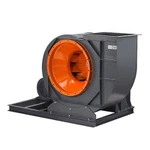


Industrial Axial Flow Fan
Why Choose Us?
Quality Assurance
We have more than half a century of production experience, and our products guarantee for ONE year and maintain for LIFE.
Good Service
We provide sincere, high-quality and efficient services.And we will reply to your email as soon as possible.
Reasonable Price
Reasonable price can promote our common development with customers.
Fast Delivery
We have trade with many countries in the world, and our products can be delivered to any place.
Industrial axial flow fans, commonly known as axial fans or propeller fans, are mechanical devices used for moving air or gases in a straight-line direction, parallel to the fan’s axis. Unlike centrifugal fans, which change the direction of airflow, axial flow fans move air in a continuous flow pattern.


1. Efficient Airflow
Industrial axial flow fans assure efficient airflow, which is why they are cooling towers and exhausts. The cooling towers cannot dissipate heat if the airflow is not proper. The water system and fill material inside these fans operate properly due to a consistent airflow from the cooler fan, which is an axial fan. The axial fans can produce a large volume of air at a regular pace and they also ensure even air circulation due to the airfoil blades.
2. Variable Speed
The speed of axial flow fans can be easily altered to suit the needs of the cooling tower or exhaust fans. The fans will continue to produce high airflow even if the speed is decreased. Against this, decreasing the speed can have a direct impact on the airflow of centrifugal fans.
3. Durable Construction
Most industrial axial fans are made from aluminum, which makes them durable, reliable, lightweight, and user-friendly at the same time. Sometimes they are also made of stainless steel, which improves their performance in harsh environments. Many manufacturers provide industrial axial fans equipped with spark-resistant and cast aluminum made propellers, which assures their safety in high-temperature applications. Their durable construction is one of the prime reasons for employing these fans in ships, aircraft, helicopters, and hydrofoils.
4. Quick Maintenance
Axial fans possess simpler designs than other industrial fan types. These fans have simple and open designs. Thus, any operational issues that arise can be easily identified and rectified. This is one of the reasons why these fans are widely used in industrial cooling and exhaust applications.
5. Improved Lifespan of Mechanical Components
These fans possess compact footprint and lightweight designs than their earlier counterparts, which helps improves the lifespan of different mechanical components in it. Generally, the axial fans have improved lifespan than other industrial fans due to their high mechanical strength and optimal designs.
6. Quieter Than Most Other Industrial Fans
Industrial axial flow fans produce low mechanical noise than conventional fans. This makes it an ideal choice for applications where noise can be a big concern.
Types of Industrial Axial Flow Fan
Tube Axial Fans
Tube axial fans are known for their cylindrical shape. These fans are ideal for moving air through ducts and are commonly used in industrial and commercial environments. Their design allows for higher pressure capabilities, making them suitable for systems with longer ductwork.
Vane Axial Fans
Vane axial fans are similar to tube axial fans but with one significant difference: they have guide vanes. These guide vanes are positioned behind the propeller, helping to straighten the airflow and reduce turbulence. This design leads to increased efficiency, making them a great choice for high-pressure applications.
Propeller Fans
Propeller fans are the simplest and most common type of axial fans. These fans consist of a motor and a propeller and are typically used for general ventilation in residential and commercial settings. They are effective for moving large volumes of air at low pressure.
High-Temperature Axial Fans
Specifically designed to operate in high-temperature environments, these fans are constructed with heat-resistant materials. They are commonly used in industrial processes where heat generation is significant, such as in steel manufacturing or power plants.
Variable Pitch Axial Fans
What sets variable pitch fans apart is the ability to adjust the angle of the blades while the fan is in operation. This feature provides flexibility in controlling the air volume and pressure, making them ideal for applications where airflow requirements change.
Low Noise Axial Fans
Noise reduction is crucial in certain environments. Low noise axial fans are engineered to operate quietly while maintaining efficiency. These fans are particularly useful in settings such as hospitals, libraries, and office buildings where noise levels need to be kept to a minimum.
Mixed Flow Fans
Mixed flow fans are a hybrid, combining features of both axial and centrifugal fans. They produce higher pressures like centrifugal fans but maintain the efficiency and compact design of axial fans. This type makes an excellent choice for applications requiring medium pressure and flow rates.

Application of Industrial Axial Flow Fan
HVAC and Commercial Buildings
In the HVAC industry, axial fans are essential for maintaining comfortable temperatures and proper air circulation in commercial buildings, offices, hotels, and shopping malls. They keep indoor environments fresh and ensure a pleasant atmosphere for occupants.
Manufacturing and Process Industries
Industrial axial fans are vital in manufacturing plants, where they cool machinery and maintain optimal operating temperatures. Additionally, they assist in various manufacturing processes, ensuring consistent product quality.
Power Generation
Power plants heavily rely on axial fans to dissipate heat generated during power generation processes. Whether it’s coal-fired, gas turbines, or nuclear plants, axial fans play a crucial role in ensuring efficiency and smooth operations.
Petrochemical and Chemical Industries
In hazardous environments like petrochemical and chemical industries, axial fans provide ventilation and fume extraction, enhancing worker safety and environmental compliance.
Agriculture and Livestock
Axial fans play a critical role in greenhouse ventilation, helping regulate temperature and humidity for optimal plant growth. In livestock farms, these fans ensure proper ventilation, reducing heat stress on animals.
Data Centers and IT Facilities
Modern data centers and IT facilities generate substantial heat from servers and equipment. Axial fans provide cooling, preventing equipment overheating and ensuring uninterrupted operations.
Mining and Tunnel Ventilation
In mining operations and tunnels, axial fans improve air quality, remove dust, and provide fresh air for workers’ safety and well-being.
Aerospace and Aviation
Axial fans are used in aircraft engines and cooling systems, helping regulate temperatures during flights and optimize engine performance.
Impeller or Blades: At the heart of an axial fan lies the impeller, often referred to as the fan blades. The number of blades can vary, and they are typically designed with an aerodynamic profile to optimize airflow efficiency.
Hub: The hub is the central portion of the impeller where the blades are attached. It connects the blades to the shaft and ensures they maintain their proper positions during rotation.
Shaft
The shaft is the mechanical component that connects the impeller to the fan's motor. As the motor rotates the shaft, it, in turn, spins the impeller, creating airflow.
Motor
The motor provides the necessary mechanical energy to drive the axial fan. Depending on the application, axial fans can be powered by electric motors, internal combustion engines, or other sources.
Casing
Surrounding the impeller and motor is the fan's casing. This casing helps direct the airflow and also provides protection for the internal components.
Technical Details of Industrial Axial Flow Fans Include
Fan design
That typically feature a cylindrical or rectangular housing, with a central impeller that rotates to draw in and expel air. The impeller is typically made of aluminum or steel, and is designed to be aerodynamic to maximize airflow.
Control options
It can be controlled using a variety of methods, such as variable speed drives, inlet vanes, or dampers. These options allow the user to adjust the fan speed and airflow to match the specific requirements of the application.
Airflow
This fans are designed to move large volumes of air at relatively low pressures. The airflow rate can be adjusted by changing the fan speed or by adjusting the impeller diameter.
Motor
The motor is typically located outside the fan housing, and is connected to the impeller via a shaft. The motor can be direct-drive or belt-drive, depending on the fan design.
Safety features
Axial fans typically include safety features such as over-current protection, thermal protection, and vibration monitoring to ensure safe and reliable operation.
Special purpose designs
They are designed for specific purposes such as explosion proof, hazardous location, high temperature, and corrosive environments .
Working Principle of Industrial Axial Flow Fan
Air Intake
The axial flow fan draws air or gas through the inlet duct, creating suction as the fan blades rotate. The rotating blades act as impellers, pulling in the surrounding air.
Air Propulsion
The accelerated air is propelled parallel to the fan’s axis, resulting in a unidirectional flow. The working principle of axial flow fans is continuous rotation of the fan blades maintains a steady flow, providing a constant stream of air or gas.

Air Acceleration
The working principle of axial flow fans, as the air enters the fan, the blades accelerate the airflow by exerting a propulsive force on it. The shape and angle of the blades are carefully designed to maximize this acceleration.
Pressure and Volume
Axial flow fans generate both pressure and volume. The pressure rise is relatively low compared to centrifugal fans, making them ideal for applications where a moderate pressure differential is required, such as ventilation systems.
1. Assessing Your Requirements
Before choosing a fan, consider the following factors:
Size of the space: Understand the volume of the space to determine the airflow needed. Consider the size of the area, the height of the ceiling, and any obstructions that may affect airflow.
Desired airflow: Calculate the required airflow based on the application’s specific needs. This can be determined by considering factors such as the number of occupants, heat-generating equipment, and the desired air change rate.
Environmental conditions: Take into account the temperature, humidity, and presence of corrosive substances. For example, in environments with high humidity or corrosive gases, selecting a fan with appropriate materials and coatings is essential. In some cases a bifurcated fan with the motor out of the airstream may be required.
2. Understanding Fan Performance Curves
Performance curves are graphs that show a fan’s airflow, pressure, and power consumption at different speeds. These curves provide valuable information for selecting the right fan that meets the desired performance requirements. By analysing the performance curves, you can determine the airflow and pressure characteristics of the fan and ensure they align with the needs of your specific application.
3. Considering Noise Levels
Industrial settings often have regulations on noise levels to ensure worker safety and comfort. When selecting an axial fan, it’s essential to consider the noise levels generated during operation. Manufacturers typically provide noise level data for their fans, allowing you to choose a fan that operates within acceptable noise ranges for your application.
4. Evaluating Energy Consumption
Energy consumption is a significant consideration when selecting an industrial axial fan, as it directly impacts operating costs. Look for fans with high energy efficiency ratings, as these will consume less power while delivering the required airflow. Fans with energy-efficient motors and optimised designs can result in substantial energy savings over the fan’s lifespan.
Precautions for Using Industrial Axial Flow Fans
When using an industrial axial flow fan, it is important to take safety precautions. These include wearing protective gear such as goggles and gloves, ensuring that the area around the fan is free of debris and other objects, and having a qualified technician install and maintain it. Additionally, be sure to check the fan’s housing regularly for signs of wear or damage, as well as its power cords for any fraying. If any of these issues are noticed, they should be addressed promptly in order to keep the fan working safely and efficiently.
When using an industrial axial flow fan, it is important to take certain precautions to ensure safety. First and foremost, always wear protective gear when working with the fan. This includes safety glasses, gloves, and a dust mask to help protect your lungs from any debris that may be in the air. Additionally, make sure you keep all flammable materials away from the fan while it is in use. Finally, be mindful of any electrical components that may come in contact with the fan; these should be checked regularly for signs of damage or wear before use.
What Is the Future Market for Industrial Axial Flow Fans
Industrial axial flow fans have become increasingly popular in recent years, as they are an efficient and cost-effective way to move air. This has led to a growing market for industrial axial flow fans, with many companies now offering a variety of models. As technology advances and more applications arise, the future market for industrial axial flow fans looks to be very promising. Companies are investing in research and development to find new ways of utilizing these fans in a variety of settings, from industrial cooling systems to HVAC applications. The future looks bright for the industrial axial flow fan market, as more industries continue to see the value that these fans can offer.
The future market for industrial axial flow fans is looking incredibly promising. Due to its high efficiency, low noise, and the ability to move air in ways that other fans can't, industrial axial flow fans are becoming increasingly popular in a variety of industries. As demand continues to rise and technology improves, we can expect the market for industrial axial flow fans to become even more competitive in the coming years. Companies who invest in research and development for their industrial axial flow fan products will be well-positioned to take advantage of this growing market.
Our factory is one of the witnesses of the development history of Qingdao's small-scale industry. Qingdao is an economically developed coastal city in China, with superior geographical location, which has created good conditions for our factory's cargo transportation. Due to the market demand for our products, we have expanded throughout China and have been opened to the global market. Dehongli was officially certified by China government. We are the member of China Fan Association, the national high-tech enterprise and the three-level enterprise of safety production standardization.

Our Certifications
Qingdao Dehongli Machinery Co., Ltd's marine-type fan have been recognized by CCS, BV, GL, DNV, LR, ABS, NK, KR, RINA, IRS and other classifcation societies.
