

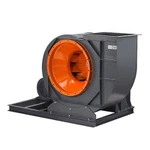


Marine Centrifugal Fan
Why Choose Us?
Quality Assurance
We have more than half a century of production experience, and our products guarantee for ONE year and maintain for LIFE.
Good Service
We provide sincere, high-quality and efficient services.And we will reply to your email as soon as possible.
Reasonable Price
Reasonable price can promote our common development with customers.
Fast Delivery
We have trade with many countries in the world, and our products can be delivered to any place.
Marine centrifugal fan is a kind of slave fluid machinery which relies on the input mechanical energy to increase the gas pressure and discharge the gas. Marine centrifugal fan is based on the principle of conversion of kinetic energy into potential energy, using high-speed rotation of the impeller to accelerate the gas, and then decelerate, change the direction of flow, so that the kinetic energy is converted into potential energy (pressure). Marine centrifugal fans are widely used for ventilation, dust removal and cooling of ships; ventilation and air induced in boilers; cooling and ventilation in air conditioning equipment and electrical equipment and inflation and propulsion of hovercraft.


1. Efficient Cooling
Centrifugal fans are designed to move large volumes of air quickly, making them highly effective in providing efficient cooling. These fans use centrifugal force to accelerate the air, creating a high-pressure airflow that is perfect for cooling large spaces. In addition, these fans are energy efficient and can be used in conjunction with an air conditioning system to reduce energy consumption and lower cooling costs.
2. Improved Indoor Air Quality
Centrifugal fans are not only efficient in cooling but can also improve indoor air quality. These fans can remove pollutants, dust, and other airborne particles, providing cleaner and healthier air. This is especially beneficial for people with allergies or respiratory problems, as these fans can help reduce the amount of allergens and pollutants in the air.
3. Versatile Applications
Centrifugal fans are highly versatile and can be used in various applications. They can be used in HVAC systems, ventilation systems, air handling units, and many other cooling and ventilation systems. In addition, they can be used in different environments, such as industrial, commercial, and residential settings.
4. Low Noise Levels
One of the biggest advantages of centrifugal fans is their low noise levels. These fans are designed to operate quietly, making them ideal for environments where noise levels must be kept to a minimum. This makes them perfect for use in hospitals, schools, libraries, and other settings where noise can be a distraction.
5. Long Lifespan
Centrifugal fans are known for their durability and long lifespan. These fans are designed to withstand harsh conditions and can operate continuously for extended periods. This means that you can rely on them to provide efficient cooling for many years, making them a cost-effective solution for cooling and ventilation needs.
6. Customizable Airflow
Centrifugal fans can be designed to provide customizable airflow, allowing them to be tailored to the specific needs of a space. For example, some fans can be adjusted to provide directional airflow, which is useful in areas where cooling is required in specific locations.
7. Easy Installation
Centrifugal fans are easy to install, making them a popular choice for retrofitting existing cooling systems. They can be installed in ductwork or mounted directly to a wall, depending on the application. This means that you can quickly and easily upgrade your cooling system without the need for major construction work.
8. Low Maintenance
Centrifugal fans require minimal maintenance, making them a low-cost solution for cooling and ventilation needs. They are designed to operate continuously for extended periods without the need for regular servicing, reducing downtime and maintenance costs.
9. Energy Efficient
Centrifugal fans are energy efficient, helping to reduce energy consumption and lower cooling costs. They can be used in conjunction with an air conditioning system to reduce the load on the system, reducing energy consumption and extending the life of the system.
10. Increased Productivity
High temperatures can have a significant impact on productivity, as it can be difficult to concentrate and work efficiently in hot and uncomfortable conditions. Centrifugal fans can help to create a comfortable working environment, improving productivity and reducing the risk of heat-related illnesses.
11. Improved Safety
In addition to providing cooling and ventilation, centrifugal fans can also improve safety in industrial settings. These fans can help to remove harmful gases, smoke, and fumes, reducing the risk of fire and explosion. They can also help to reduce humidity levels, which can be beneficial in environments where moisture can cause safety hazards.
12. Reduced Mold and Mildew
High humidity levels during summer can create the perfect conditions for mold and mildew to grow. Centrifugal fans can help to reduce humidity levels, making it more difficult for mold and mildew to grow. This can help to improve indoor air quality and reduce the risk of respiratory problems.
13. Easy Control
Centrifugal fans can be easily controlled through a thermostat or a building automation system, allowing for easy management of cooling and ventilation needs. This means that you can adjust the airflow and temperature to suit your specific needs, improving comfort and reducing energy consumption.
14. Aesthetically Pleasing
Centrifugal fans are available in a range of designs and finishes, making them a popular choice for spaces where aesthetics are important. These fans can be customized to match the decor of a space, making them a functional and visually appealing addition to any environment.
15. Cost-effective
Finally, centrifugal fans are a cost-effective cooling solution that can help to reduce energy consumption and lower cooling costs. They require minimal maintenance and can be used in conjunction with an air conditioning system to provide efficient cooling at a lower cost.
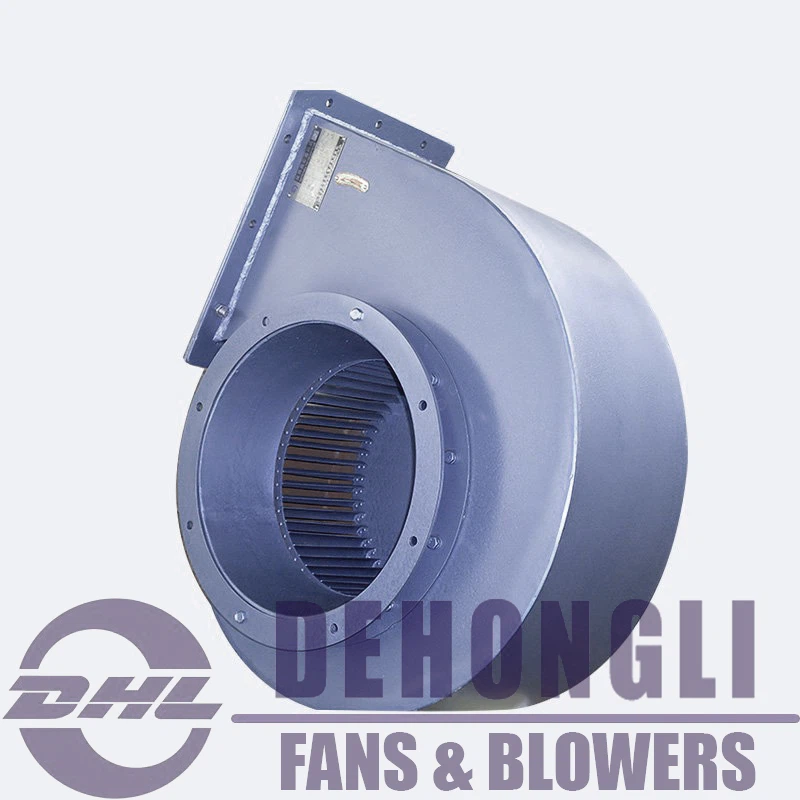
Application of Marine Centrifugal Fan
Heating, Ventilation, and Air Conditioning (HVAC) Systems
Centrifugal fans are widely used in HVAC systems for air circulation, ventilation, and temperature control in buildings, offices, shopping malls, hospitals, and other commercial spaces.
Industrial Ventilation
In industrial settings, centrifugal fans are employed for exhaust ventilation to remove fumes, dust, and other airborne contaminants, ensuring a safe and healthy working environment.
Dust Collection Systems
Centrifugal fans are a critical component in dust collection systems. They help draw in dust-laden air and transport it through filters to remove the particulate matter before releasing clean air into the atmosphere.
Air Pollution Control
Centrifugal fans are used in various air pollution control systems, such as scrubbers and electrostatic precipitators, to capture and remove pollutants from industrial emissions.
Industrial Ovens and Dryers
Centrifugal fans are used for circulating hot air in industrial ovens and dryers, ensuring even heating and drying of materials or products.
Cooling Systems
Centrifugal fans are utilized in cooling applications, such as cooling towers, radiators, and air-cooled heat exchangers, to dissipate excess heat from industrial processes and equipment.
Boilers and Furnaces
These fans aid in supplying combustion air to boilers and furnaces, ensuring efficient and controlled burning of fuels.
Agricultural Applications
Centrifugal fans are used in agricultural settings for grain drying, ventilation in livestock buildings, and other agricultural processing operations.
Air Handling Units (AHUs)
Centrifugal fans are a critical component in AHUs, which condition and circulate air in centralized HVAC systems.
Key Components of Marine Centrifugal Fan
Impeller
The heart of the centrifugal fan is the impeller, a rotating disk with curved blades. These blades are designed to capture air at the center of the impeller and impart a radially outward motion to the air.
Housing or Casing
The impeller is housed in a casing or housing with a gradually expanding spiral shape. As the air moves radially outward, it gains velocity and pressure due to the increasing volume in the casing.
Inlet and Outlet
The centrifugal fan has an inlet that draws air into the impeller and an outlet where the pressurized air is discharged.
How the Marine Centrifugal Fan Housing Affects Pressure and Airflow
The marine centrifugal fan housing directs the air moved by the impeller; it surrounds the impeller and forms a chamber that contains the impeller and the air being moved.
The housing is designed to guide the air as it flows through the marine centrifugal fan and push it out – via the discharge point – in a specific direction. This helps to increase the pressure and velocity of the air as it exits the marine centrifugal fan. The housing prevents air leaks and protects the impeller and other internal components from external elements.
The shape and size of the housing are also important factors that determine the performance of the marine centrifugal fan and its ability to move air effectively.
The typical clearance between blade tips and housing is 0.25% of the impeller’s diameter. Reducing this clearance will increase peak marine centrifugal fan pressure (and vice versa). Housings can also include features such as inlet and outlet cones, vanes and scroll sections to further shape and guide the airflow.
A marine centrifugal fan housing typically looks like an ammonite shell without the spiral. This is called a volute casing; it is a curved funnel that increases in area as it approaches the discharge port.
The ‘ammonite’-style shape of a volute casing uses an outlet flow design. The air leaving the impeller has kinetic energy proportional to its velocity pressure – resulting in greater efficiency.
This is because the kinetic energy of the air helps to maintain its momentum as it flows through the marine centrifugal fan, reducing losses due to friction and turbulence. Additionally, the ammonite-style shape of the volute casing helps to smooth out the flow of the air and further reduce these losses – resulting in a more efficient marine centrifugal fan overall.
Rising demand for energy-efficient ventilation systems in the marine industry is driving the growth of the market. As ship operators look for ways to reduce energy consumption and comply with environmental regulations, the demand for efficient centrifugal fans is increasing.
Technological advancements in fan design and manufacturing are also contributing to market growth. The development of high-performance materials and advanced fan blade designs has led to the production of more efficient and durable centrifugal fans.
The growing trend of maritime tourism is creating opportunities for the marine centrifugal fans market. An increasing number of cruise ships and luxury yachts require reliable and efficient ventilation systems to ensure the comfort and safety of passengers.
Government initiatives and regulations promoting sustainable shipping practices are driving the adoption of eco-friendly centrifugal fans in the marine industry. The need to reduce emissions and comply with environmental standards is bolstering the demand for energy-efficient ventilation solutions.
What Are the Precautions for the Maintenance and Maintenance of Marine Centrifugal Fan?
Regular cleaning
Both the inside and the outside of the marine centrifugal fan need to be cleaned regularly. To remove dust and impurities, to ensure its normal ventilation and heat dissipation. Take care to use proper tools and cleaning agents when cleaning. To avoid damage to the marine centrifugal fan.
Periodic inspection
Regularly check the various indicators of the marine centrifugal fan, such as current, voltage, speed, etc. to ensure its proper functioning. At the same time, pay attention to check whether the various components of the marine centrifugal fan are normal. Such as whether the impeller is deformed, whether the bearing is worn, etc.
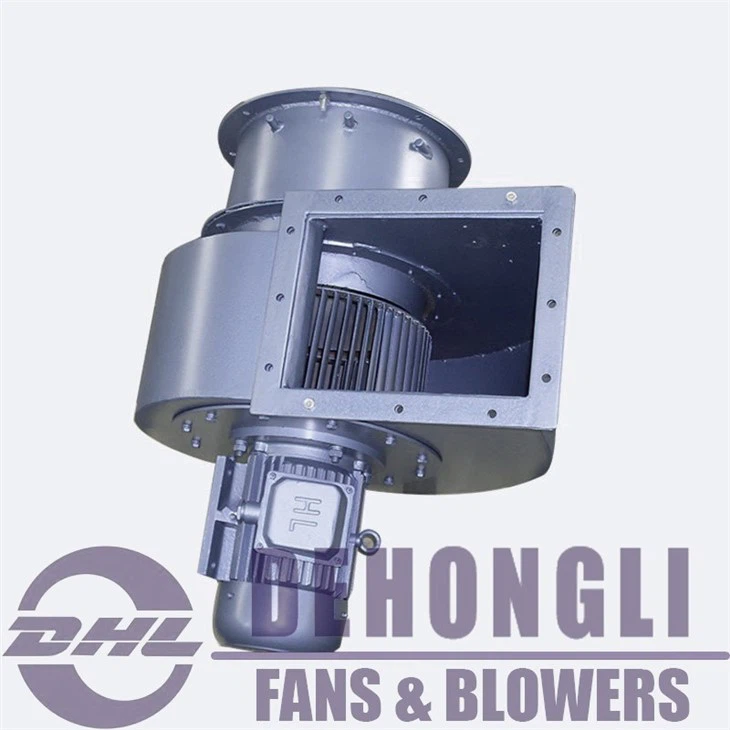
Lubricate regularly
The bearings and gears of the marine centrifugal fan need to be lubricated regularly. To reduce wear and friction, to ensure its normal operation. Pay attention to the use of proper lubricant and lubrication method to avoid over-lubrication or under-lubrication problems.
Prevent overloading
Marine centrifugal fans need to avoid overloading during operation, otherwise they will be damaged. Pay attention to its rated power and rated current when installing and using a marine centrifugal fan. At the same time, avoid long-term overload operation of the marine centrifugal fan.
Troubleshooting Issues for Marine Centrifugal Fans
Your marine centrifugal fan isn’t producing the proper airflow.
When your marine centrifugal fan is turned on, you should notice it moving large amounts of air around at any given moment. If it’s not, that’s an issue. There are several reasons why this might happen. In some instances, you might have broken belts within your marine centrifugal fan. In others, you might have a pipe leak or a broken drive coupling. Whatever the case, it’s a good idea to shut your marine centrifugal fan down and have it inspected as soon as possible to get it up and running again.
The blower in your marine centrifugal fan isn’t rotating.
Another common troubleshooting issue with your marine centrifugal fan will occur when the blower inside of it stops rotating. This can happen if rust builds up in your blower impeller chamber. It can also take place if there is damage that has been done to your motor winding. You could even have an electrical wiring issue on your hands. You’ll usually need to turn your marine centrifugal fan off and take the blower apart to investigate the source of the problem.
You notice oil leaking from your marine centrifugal fan.
It’s not out of the ordinary to see a marine centrifugal fan leaking a little bit of oil. Nevertheless, if you notice a lot of oil leaking onto the floor under your marine centrifugal fan, this should be a major cause for concern. Your marine centrifugal fan can lose lubrication due to a worn seal, a blown gasket, a loose drain plug, or any number of other things. You should attempt to see if you can locate the cause of the leak or call on a professional for help.
Marine Centrifugal Fans Market Opportunities
The increasing focus on digitalization and connectivity in the maritime sector presents opportunities for the integration of smart and IoT-enabled centrifugal fans. Advancements in sensor technology and data analytics offer the potential for predictive maintenance and performance optimization in marine ventilation systems.
Growth in offshore wind energy and the expansion of offshore oil and gas exploration activities create opportunities for centrifugal fan manufacturers. Ventilation solutions for offshore platforms and vessels supporting these industries are in demand, driving opportunities for market expansion.
Rising environmental concerns and the push for sustainable shipping practices open opportunities for the development of eco-friendly centrifugal fans. Manufacturers can capitalize on the demand for energy-efficient and low-emission ventilation solutions in the marine industry.
The trend towards alternative fuel sources in the maritime sector, such as LNG and hydrogen, presents opportunities for centrifugal fan suppliers. Ventilation systems designed to accommodate these alternative fuels and contribute to emissions reduction are in demand, creating opportunities for market growth.
Tips for Selecting the Right Marine Centrifugal Fan for Your Business
Consider the size of your facility.
The size of your facility is likely going to play a big role in which marine centrifugal fan you decide to invest in. If your facility is on the smaller side, you might be able to get away with a smaller marine centrifugal fan. But you’ll likely need something a lot more heavy-duty if you have a larger facility. You may also want to consider installing a custom marine centrifugal fan if you need to install it in a specific spot where space might be an issue.
Think about the kinds of materials that might pass through your marine centrifugal fan.
What types of materials do you have in the air in your facility? There are some marine centrifugal fans that can only process air, gases, and maybe dust. But there are others that are able to process things like sawdust, wood chips, sand, and other slightly larger materials. You don’t want to buy a marine centrifugal fan that isn’t equipped to deal with whatever you might throw at it.
Purchase a marine centrifugal fan from a trusted manufacturer.
When purchasing a marine centrifugal fan, you should always look for a trusted manufacturer that is known for creating high-quality fans that are built to last. You should also work with an experienced marine centrifugal fan installer that can put your fan into place and help you service, maintain, and repair it over the years. It’ll allow you to make the most of your marine centrifugal fan over time.
Our factory is one of the witnesses of the development history of Qingdao's small-scale industry. Qingdao is an economically developed coastal city in China, with superior geographical location, which has created good conditions for our factory's cargo transportation. Due to the market demand for our products, we have expanded throughout China and have been opened to the global market. Dehongli was officially certified by China government. We are the member of China Fan Association, the national high-tech enterprise and the three-level enterprise of safety production standardization.

Our Certifications
Qingdao Dehongli Machinery Co., Ltd's marine-type fan have been recognized by CCS, BV, GL, DNV, LR, ABS, NK, KR, RINA, IRS and other classifcation societies.
