

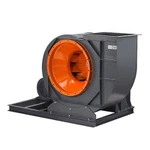


Industrial Centrifugal Fan
Why Choose Us?
Quality Assurance
We have more than half a century of production experience, and our products guarantee for ONE year and maintain for LIFE.
Good Service
We provide sincere, high-quality and efficient services.And we will reply to your email as soon as possible.
Reasonable Price
Reasonable price can promote our common development with customers.
Fast Delivery
We have trade with many countries in the world, and our products can be delivered to any place.
A centrifugal fan is a mechanical device for moving air or other gases in a direction at an angle to the incoming fluid. Centrifugal fans often contain a ducted housing to direct outgoing air in a specific direction or across a heat sink; such a fan is also called a blower, blower fan, or squirrel-cage fan (because it looks like a hamster wheel). Tiny ones used in computers are sometimes called biscuit blowers. These fans move air from the rotating inlet of the fan to an outlet. They are typically used in ducted applications to either draw air through ductwork/heat exchanger, or push air through similar impellers.


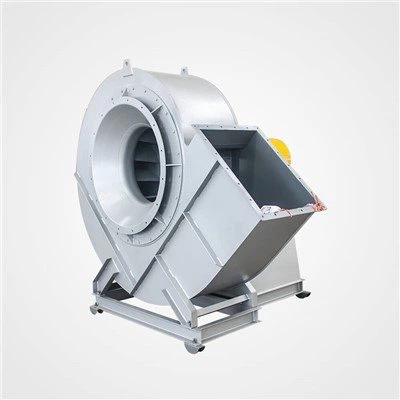


Advantages of Industrial Centrifugal Fan
High flow rate
Industrial centrifugal fans can generate a high flow rate, making them suited for applications where there is a requirement for the flow of larger volumes of airflow with high pressure. They are highly useful in industrial processes like the conveyance of material in dust collector systems, combustion air for burners, drying and cooling setups apart from general ventilation, and circulation of air.
Compact size
This is one of the most important aspects of industrial centrifugal fans. They are relatively small and compact, making them easy to install even in tight spaces. They can operate very efficiently in confined spaces while consuming little power. This is the reason why they are often used in commercial household appliances like extractor hoods and smaller industrial vacuum lifters.
Versatility
Industrial centrifugal fans are extremely versatile and can be used in a wide range of industrial processes, including ventilation, air circulation, drying, and cooling. They can be easily adapted to various industrial applications and are useful for multiple pressure combinations. These fans can work well under several airflow conditions, including clean, dry, and wet air.
Energy efficiency
Industrial centrifugal fans are typically better energy efficient than other types of fans, as they have the ability to generate a high flow rate using less power, no matter the sector or industry where they are used. Energy efficiency is one of the cornerstones in the design of these fans.
Low maintenance
Industrial centrifugal fans are relatively simple in design and need minimal maintenance. This makes them a cost-effective option for many industrial processes. So it is essential to properly maintain industrial centrifugal fans to ensure their long life and smooth applications. Routine inspection and health check-up of the rotating equipment not only help in the trouble-free operation of the plant but also reduces the downtime of the system. Apart from that, is also important to remove airborne contaminants from the fan system to improve its efficiency and reduce higher operating costs.
Durability
Industrial centrifugal fans are created from sturdy materials and can easily withstand harsh industrial environments which makes them a long-lasting and reliable choice for many applications. A industrial centrifugal fan’s life expectancy relates to 3 factors – environment, construction materials and it’s maintenance. They are more durable and typically work longer than other standards like axial versions.
Clean air handling
Air circulation is an essential component of all industrial activities and facilities. Industrial air handling activities support processes while also maintaining clean air in the surrounding area. Centrifugal fans play a crucial role in managing large volumes of clean air.
Material handling
Sand, plastic pellets, sawdust, wood chips, grain paper trim, and other particles can be processed using centrifugal force material running. They range in size from microscopic particles to heavy, abrasive compounds.
High-temperature process
Many processes rely on high-temperature or heating systems. Heat is circulated through chambers via a heat convection system, which necessitates the employment of precisely engineered centrifugal fans.
Saturated air treatment
Most centrifugal fans process saturated air regularly, necessitating heavy-duty materials and moisture-resistant coatings. This is sometimes critical to maintaining product quality, and effective industrial fans make the process go more smoothly.
Dust loading operation
These fans are also used in industrial processes as part of the dust collection system to maintain air quality. The system's many components can move small particles alongside the dust and can include air filtration.
Industrial Centrifugal Fan Materials and Construction
Fan Casings – Diecast Aluminium Vs Stainless Steel
Most fan casings tend to be cast from aluminium – regardless of which type the fan may be. LM6 is a popular grade of aluminium for fans for the following reasons:
Its excellent thermal conductivity helps in dissipating the heat generated during the operation of the fan. This helps to keep the fan cool and prevents any damage to internal components due to excessive heat.
LM6’s high strength-to-weight ratio makes it a lightweight yet sturdy material for the casing. This helps to reduce the overall weight of the fan, making it easier to install and transport.
High resistance to corrosion – making it suitable for use in harsh environments such as chemical plants. This property helps to extend the life of the fan and reduces maintenance costs.
LM6 is easy to cast and machine – reducing the time and cost of manufacturing the fan.
Fan Motors’ Construction
Fan motors also tend to be constructed from diecast aluminium. Most housings are of the ‘squirrel cage’ type with fins to aid cooling.
Aluminium is usually the material of choice for motor housings for all the reasons outlined above. But cast iron is recommended for applications where robustness is key – especially in environments where there is a risk of explosions.
Cast iron is strong and durable. It has good mechanical strength and is resistant to wear and tear. However, it is much heavier than aluminium – and it is also vulnerable to corrosion. Applying a protective coating, such as paint or enamel, can prevent exposure of the cast iron to moisture and oxygen.
Impellers – Materials and Construction by Fan Type
Impellers comprise a back plate, shroud (front) plate and blades.
Forward-curved centrifugal fan impellers are manufactured from mild steel that is protected with a layer of zinc to help prevent corrosion. That zinc layer can be applied by galvanisation (dipping in molten zinc) or by plating (using electrolysis).
Backward-curved and radial centrifugal fans have larger, weightier impellers than their forward-curved counterparts. The impeller blades of backward-curved and radial fans are bigger (and spaced further apart) than those in the ‘hamster wheel’ impellers of forward-curved fans.
This means that backward-curved and radial impellers are usually manufactured from thicker, heavier steel that can be wet painted if required. (Blade size and spacing is not the issue it can be with forward-curved impellers).
Types of Industrial Centrifugal Fan
Forward Curved Centrifugal Fans
Centrifugal fans with Curved Blades inclined forward are called forward-curved fans. They are perfect for use in low-pressure applications, including HVAC systems, air purifiers, and dust collectors, since they provide significant airflow at low pressures. They are suitable for usage in settings where noise is a concern because they are also relatively quiet.
Radial Centrifugal Fans
Radial centrifugal fan produce high-pressure airflow in a radial direction. They are frequently utilized in industrial settings, including pneumatic conveying, industrial exhaust systems, and material handling.

Backward Curved Centrifugal Fans
Backward-curved centrifugal fan have blades curved backward, generating a higher pressure than forward-curved fans. They are efficient at moving air and suitable for high-pressure applications such as industrial ventilation systems, air conditioning, and refrigeration systems.
Aerofoil Centrifugal Fans
Centrifugal fan that resemble aerofoils blades that resemble them, much like the aerofoils of an aircraft wing. They are effective at moving enormous amounts of air because they produce a high airflow volume at high pressures. They are frequently used in industrial exhaust systems, HVAC systems, and others.
Top 5 Industrial Processes Where Industrial Centrifugal Fans Are Used
Industrial Cooling
Industrial centrifugal fans often termed industrial cooling fans are used to displace air or gas from one point to another. The primary function of the fan is to drive in the cold air and blow hot air out of the industrial environment.
In cement manufacturing industries, a large number of cooling fans are used. It blows cold air to the cooler and cools the clinker from 1500oC to 100oC.
Similarly, in glass manufacturing industries, cooling fans are required. They are used to cool down the temperature of the oven walls to cool the glass material.
Air Re – Circulation:
In heavy industries heat and energy production is massive. A stable and consistent airflow is needed to maintain proper fuel combustion.
For instance, Centrifugal Fans in industrial boilers allow fresh air to blow into the system. This process maintains the oxygen levels required for ignition.
In Steel manufacturing industries, Industrial Circulation Fans are used for circulating cool air into the ovens. The circulation maintains a homogeneous temperature inside the oven.
In power plant boilers, Forced Draft Fans (FD) supply the air necessary for fuel combustion. The process involves pushing air through the combustion air supply system and into the furnace.
Re- Dusting
In every industry, centrifugal fans have wide usage of dust collection. There are many variations of dust collectors to remove nuisance such as process dust. The fans used are either forced draft fans or induced draft fans through the system.
The re-dusting process requires centrifugal fans to work on the depression-type system and pressure-type system applications.
And, in depression-type system application, backward inclined or airfoil centrifugal fans are used. The fan is mounted on the tip of the cyclone or within the filtering system to remove airborne particles.
Air Drying
Industrial Forced or Induced Draft Fans are needed in industrial processes to control the temperature and moisture content. Hot air is forced through the fans to circulate the air needed for removing excessive moisture.
In Paper Industry, these fans are used for drying sheets of paper. It may occur either by passing the material through a heated oven or exhausting the air of the paper pulp.
Similarly, in Food Processing Industries, Centrifugal Dryer fans are required. The Fan removes the moisture content from the food before it is sent to packaging.
Conveying Materials
Industrial centrifugal fans are used for handling and conveying materials. Small and light materials like sand, plastic pallets, sawdust, and wood chips can be easily handled by average Centrifugal Fans. But for heavy industrial materials such as steel and other alloys, abrasion-resistant centrifugal fans are required.
Common centrifugal fans required for conveying materials are high-pressure Radial Fans or Industry Exhauster Fans.
5 Factors That Cause Industrial Centrifugal Fan Failure
One cause of industrial centrifugal fan failure is the lack of airflow. Airflow obstructions can potentially indicate other problems. Inadequate airflow, for example, could be caused by a duct system that opposes or restricts airflow. Other possible causes include an incorrectly set blade angle, an inadequately mounted impeller, and a misaligned impeller not secured by intake collars, to name a few. Insufficient airflow may harm not only the fan, but also other components. Filters can also have reduced airflow as a result of unclean or clogged filters. A filter replacement with higher pressure drop parameters or an entirely new coil installation with tighter fin spacing could be the solution.
Industrial fans are electrical devices, therefore there is a good chance that they will experience noise and vibrations from both inside and outside the machine. These elements have an immediate impact on the performance and durability of industrial fans over time. This problem can be diagnosed by signs such as a squeaking noise made by the fan when it is turned on. It may be caused by foreign particles entering the fan, corrosion, loosened bearings and shafts, a lack of lubrication, which creates friction, and other factors. These problems can cause immediate industrial centrifugal fan failure.
Damaged or misaligned components can also cause industrial centrifugal fan failure. For example, if an Impeller comes into contact with an intake or housing, it may not be properly aligned. In other words, the impeller could be off center. And an impeller’s role in disturbing a fan isn’t limited to that. A misshaped or broken impeller can contribute to fan noise, interruption, and failure. Loose bearings and shafts may also be to blame for constant fan noise. A bowed shaft, shaft and bearing misalignment, or belt failure could potentially cause noise.
Mechanical or electrical issues are the two main categories of industrial centrifugal fan failure that can completely stop the fan. Faulty belts, loose pulleys, insufficient power, inadequate wire size, blown fuses, and other issues can occur in these areas. It is advisable to get the bearings of the fan checked and properly detected by a specialized person.
Vibrations can easily detect any industrial centrifugal fan failure. Unbalanced impellers, sheaves, or a motor can all be detected by vibrations. Bearings could possibly be to blame. Bearings in a motor must meet standards and be able to withstand load. Vibrations may also indicate a problem with the fan’s foundation; isolators, shims, and anchor bolts on the fan’s foundation should be properly sized and installed.
● Make sure to follow the proper lockout and tag-out procedures before any maintenance or service on the fan.
● Verify that all guards and access doors are firmly in place before operating the machinery. Never open access doors, screens, or guards while using the machinery.
● Screens are strongly advised in areas where inlets and outputs are not ducted.
● Never operate machinery above the recommended speed or temperature range. These restrictions are listed on the drawing that came with your fan.
● A licence electrician must complete all wiring.
● Some equipment surfaces may get warm, especially those used in high-temperature applications. Before beginning maintenance, ensure that the surfaces have cooled.
● Check the rotor closely for wear, damage, and cracks. Any Rotor that is broken or exhibits severe wear needs to be replaced. Equipment with damaged rotors should not be used. When doing a rotor inspection, adhere to all lockout requirements.

Proper Storage Environment for Industrial Centrifugal Fans
● Industrial fan kept in storage for a while has to be shielded from dust and moisture.
● The device will stay clean and dry if a tarp is used to cover it. A dark plastic tarp should not be used since it will encourage moisture.
● The bearings should be cleaned weekly with fresh grease to prevent long-term or outdoor storage moisture.
● Rotate the fan wheel by hand at least once every two weeks to spread the grease on the bearing parts.
● Idling motors should be stored in accordance with the manufacturer’s instructions.
● Any nearby vibrations must be shielded from the fan. The fan and motor bearings can be damaged by high vibration in the fan storage area.
1. Heat and High Temperatures Could Affect Your Fan’s Motor
Some industrial plants need to perform operations in harsh, hot environments, and if you fall in that camp, you may worry about high temperatures adversely affecting your industrial centrifugal fans’ motors. As such, it’s important that you have the right insulation class motor, and that it’s properly wired to ensure it doesn’t ware out from high temperatures, shortening its lifespan in the process.
2. You Should Try to Avoid Starting It And Shutting It Down All the Time
Unless it’s a motor specially designed for frequent starts and stops, turning turning the motor of your industrial fan on and off rapidly and consistently, it could potentially shorten its window of use, forcing you to have to replace the motor earlier than you anticipated.
3. The Motor’s Location Is Determined By Different Variables
The motor is a industrial centrifugal fan is based on the drive side of the fan, and the exact needs of your industrial business. It’s essential to place the motor in the right position to ensure you’re getting the most out of your industrial centrifugal fans and that they’re working as efficiently as possible for your building.

Our factory is one of the witnesses of the development history of Qingdao's small-scale industry. Qingdao is an economically developed coastal city in China, with superior geographical location, which has created good conditions for our factory's cargo transportation. Due to the market demand for our products, we have expanded throughout China and have been opened to the global market. Dehongli was officially certified by China government. We are the member of China Fan Association, the national high-tech enterprise and the three-level enterprise of safety production standardization.
Our Certifications
Qingdao Dehongli Machinery Co., Ltd's marine-type fan have been recognized by CCS, BV, GL, DNV, LR, ABS, NK, KR, RINA, IRS and other classifcation societies.
