

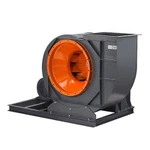


Centrifugal Industrial Blower
Why Choose Us?
Quality Assurance
We have more than half a century of production experience, and our products guarantee for ONE year and maintain for LIFE.
Good Service
We provide sincere, high-quality and efficient services.And we will reply to your email as soon as possible.
Reasonable Price
Reasonable price can promote our common development with customers.
Fast Delivery
We have trade with many countries in the world, and our products can be delivered to any place.
A centrifugal blower is a motor or pump that moves air using the centrifugal force created by the rotation of an impeller that pulls air or fluids into the blower and pushes it out through the blower's outlet. They are made up of an impeller, housing, and drive mechanism, with the impeller being the key element that has a series of blades mounted on a central hub connected to a fan shaft.

Impeller: made of different pieces of impeller and wheel, wheel cover inserted, and after dynamic balance correction, good air performance, high efficiency, low noise, smooth operation.

It can be used for mine ventilation and general ventilation when there are no special requirements; it is mainly used to meet the places where a large air flow is needed, with low noise and high efficiency.

High Pressure Industrial Air Blower
High pressure fan, generally used for forging furnace and high pressure forced ventilation, and can be widely used for conveying materials, conveying air and non-corrosive, non-spontaneous combustion, non-viscous substances of gas.

According to your actual use, can be customized stainless steel, glass fiber reinforced plastic, titanium and other different materials high temperature resistance, corrosion resistance materials, the production of centrifugal fans are customized according to customer requirements.

High Temperature Centrifugal Fan
The motor shaft is flexibly connected to the drive shaft, so there is no need to frequently tension the belt or replace the belt, and the maintenance workload is small.

Industrial Centrifugal Extractor Fan
Industrial centrifugal fan is a kind of driven fluid machinery, which depends on the input mechanical energy to increase the gas pressure and discharge the gas.

Centrifugal Exhaust Fan Blower
When used as a ventilator for gas transmission, the temperature of the medium generally does not exceed 80℃, and when used as a boiler induced draft fan, the temperature of the conveyed flue gas medium generally shall not exceed 250℃.

Stainless Steel Centrifugal Fan
Stainless steel centrifugal fan is a relatively good fan equipment, which is now accepted by more and more users. Compared with traditional fan equipment, stainless steel centrifugal fan does have many advantages and characteristics. For users, in order to meet their needs, more buildings and fan equipment have more new needs.

Stainless steel centrifugal fan is equipped with shaft sealing device to protect the bearings and shaft from the erosion of acid and alkali gases, prolonging the service life of the fan and reducing the frequency of failure. The fan motor and bearing can be imported or domestic brand according to the customer's needs.
1. Low Maintenance
The most notable factor regarding centrifugal industrial blowers is their low maintenance cost. After spending thousands of dollars on equipment repairs and installation, a centrifugal industrial blower's low cost helps maintain and control operating costs. With other air circulation methods, it is important to frequently check for the build-up of dust and dirt. This is not necessary with industrial centrifugal industrial blowers. A small vacuum to clean the motor and vents is all that is needed. The simple modular design of centrifugal industrial blowers makes them easy to maintain and service.
2. Energy Savings
With any form of industrial device, the efficiency of operation ensures lower cost and improved productivity. The constant and even air flow from a centrifugal industrial blower generates energy that reaches 84% static efficiency, which is an ideal standard for maintaining large air flow systems.
3. Versatility and Adaptability
One of the main reasons that centrifugal industrial blowers are so widely used is their ability to adapt, adjust, and configure to meet any industrial operation's needs. centrifugal industrial blowers can operate in any air flow system and be adjusted to meet the needs of a changing and growing operation. Centrifugal fans and blowers can be found in any industry, from paper mills to automobile plants. In each case, they serve a different purpose at the highest possible efficiency.
4. Durability and Hazard Resistance
Many modern-day manufacturing processes require equipment that can withstand hazardous and harsh conditions due to the operating environment. centrifugal industrial blowers and fans are designed to perform in corrosive, toxic, high-temperature, and high-humidity conditions. Each type of centrifugal industrial blower is engineered to meet the needs of the manufacturing conditions and offer exceptional performance.
Types of Centrifugal Industrial Blower
Radial Blade Blowers
Radial blade centrifugal blowers use an impeller with multiple equally-spaced flat blades that extend perpendicular to the direction of the wheel rotation. The blades are much heavier, deeper, and narrower than inclined blades. They produce medium to high pressure and are well suited for material handling and in some moderate pressure industrial applications.
Airfoil Blade Blowers
Blowers that use airfoil blades have hollow backward inclined blades that are suitable to handle large volumes of clean air at low to moderate static pressures. These blowers are very efficient and run at greater speed than blowers with inclined blades. As they can handle large volumes of air, these blowers are typically used for HVAC systems, air pollution control, drying and filtration, and other industrial processes.
Radial Tip Blowers
Radial tip centrifugal blowers have a more compact design than their airfoil and backward curved brethren and are ideal for high-volume flow rate applications where the pressure requirement is also relatively high. Radial tip blowers have moderate material handling capabilities but are more efficient than radial blade fans. They are generally used in dust collection systems and general ventilation applications.
Inline Centrifugal Blowers
Inline centrifugal blowers have rugged construction with backward inclined type wheels enclosed in a tube-axial casing. These are medium-duty fans that are less efficient than other varieties and are commonly used in low pressure industrial applications.
Clean Air Circulation
In some industrial processes, the circulation of clean air is extremely important. With the capacity to circulate clean air at high volumes, Centrifugal industrial blowers emerge as an obvious choice in this scenario, as they are also robust by design and can handle heavy-duty operations.
Material Handling
Small particles like sand, sawdust, paper trim, wood chips, plastic pellets and other such materials are often handled using a strong centrifugal force. Hence, a blower also comes in handy for such operations, for it can handle a plethora of such fine particles with ease.
High-Temperature Operation
Many industrial processes require high temperatures. Moreover, this heat also needs to be circulated from one part of the system to the other and convection is the most feasible option to do so. In such cases, centrifugal fans become an integral part of the operation, efficiently distributing and circulating heat.
Saturated Air Processing
In some industries, processing saturated air is paramount. Saturated air essentially means air that has extreme levels of moisture, thus industries, where the products need to be completely dry, use centrifugal fans to process this air. Moreover, these blowers are ideal for this operation as they have a non-corrosive and moisture-resistant coating.
Dust Collection
Apart from delivering clean air, centrifugal industrial blowers can also be used exclusively for dust collection. These blowers can work in tandem with air filtration units to remove dust and other small, unwanted particles from the air.
5 Critical Parts of Centrifugal Industrial Blowers
Impeller: The Heart of the centrifugal industrial blower
Impellet of a centrifugal industrial fan is the most crucial part of the assembly. Comprising a set of blades, the impeller gives wings to the air passing through. With a touch of centrifugal magic, it propels the air outward, enhancing its speed and power. The impeller's design – including the number, shape, and arrangement of blades – holds the key to unlocking the blower's performance potential. The height, width, curves, numbers of blades, degree of inclination defines how well air will be discharged and how efficient the pressure is increased.
Housing/Casing: Containment and Direction
Think of the impeller like the conductor of an airflow orchestra. It plays a crucial role in controlling how air moves. Made up of a bunch of blades, the impeller pushes the air forward. By using centrifugal force, it makes the air go faster and stronger. How the impeller is made – how many blades it has, their shape, and how they're arranged – determines how well the blower will work. This design is what makes the blower perform better or worse.
Inlet and Outlet: Entry and Exit Points
Now, let's focus on the inlet and outlet – these are the places where the blower connects with the outside. The inlet brings air into the blower, and the outlet lets out the high-pressure air that the impeller has created. These parts are designed carefully to make things work better. A well-designed inlet reduces turbulence, making sure the air comes in smoothly. And the shape of the outlet affects how the high-pressure air comes out at the end.
Motor: Powering the Blower
Let's introduce the motor, the powerhouse that makes the blower work. The motor gives the impeller the energy it needs to move the air around. In the world of industrial blowers, these motors need to be strong, with good torque. They have to overcome the resistance from the impeller and the weight of the air. Picking the right size and type of motor is as important as choosing the main actor in a play – it's key to a great performance and the blower's durability.
Bearings: Enabling Smooth Rotation
Now, let's explore the world of bearings – these are the essential parts that keep the impeller spinning smoothly. Bearings have an important job; they help the impeller rotate really fast with as little friction as possible. Keeping the bearings well-oiled and properly taken care of is what keeps the blower working well for a long time. Plus, bearings also help absorb any unexpected forces while the blower is running, sort of like backstage workers making sure everything goes smoothly during a show.
4 Ways to Make a More Efficient Centrifugal Industrial Blower

1. Changing Fan Location
When it comes to improving the energy efficiency of a centrifugal industrial blower, one of the simplest things you can do is change the location of its fan. This will effectively reduce the length of the pathway and make it more efficient around bends, thereby improving its performance by a noticeable margin.
2. Use Variable Axial Fans
When it comes to centrifugal industrial blowers, one size does not fit all. That's why variable pitch axial fans are such an important energy-saving tool. By allowing you to adjust the airflow to match the specific needs of your application, variable axial fans can help you avoid overspending on energy. Combining this with multi-speed motors can lower power consumption by almost 30 percent if done right.
3. Identify Right centrifugal industrial blower For the Application
When it comes to improving the energy efficiency of a centrifugal industrial blower, one of the most important factors to consider is choosing the right centrifugal industrial blower for the application. There are many different types and sizes of centrifugal industrial blowers on the market, so it is important to select one that is properly sized for the job at hand. If a centrifugal industrial blower is too small for the application, it will have to work harder and use more energy to get the job done. On the other hand, if a centrifugal industrial blower is too large for the application, it will not be able to operate at its full potential and will also waste energy.
4. Focus On centrifugal industrial blower Inlet
Centrifugal industrial blower inlet design is often overlooked when trying to improve the energy efficiency of a centrifugal industrial blower. By focusing on the inlet design, one can improve the airflow of the centrifugal industrial blower and reduce energy consumption.
There are a few factors to consider when designing the inlet of a centrifugal industrial blower:
The shape of the inlet. The inlet should be designed to minimize turbulence and promote smooth airflow into the centrifugal industrial blower.
The size of the inlet. The inlet should be large enough to allow adequate airflow into the centrifugal industrial blower, but not so large that it causes an excessive pressure drop.
The location of the inlet. The inlet should be located so that it is exposed to as much uniform airflow as possible.
The surface finish of the inlet. The smoother the surface finish, the better the airflow into the blower will be.
The Latest Advancements in Centrifugal Industrial Blower Technology
Enhanced Energy Efficiency in Centrifugal Industrial Blower Technology
The most recent developments in the technology of centrifugal industrial blowers have yielded notable enhancements in energy efficiency, leading to diminished expenses, diminished carbon dioxide emissions, and an increasingly eco-friendly option.
Advancements in Fan Wheel and Housing Design for Higher Efficiency and Customizability
Advancements in centrifugal industrial blower technology have led to innovations in fan wheels and housing design, enabling these devices to perform at higher efficiency levels, reduce noise levels, and lower maintenance costs. These improvements have been utilized in a variety of applications, including pneumatic conveying, wastewater aeration, high inlet temperature applications, and recycled-material manufacturing.
Centrifugal Industrial Blower Reduced Noise Levels
The latest centrifugal industrial blower technology advancements offer significantly reduced noise levels, achieved through the use of materials that reduce casing vibration and sound radiation. centrifugal industrial blowers are versatile and can be used for various industrial applications, including clean air handling, material processing, and general ventilation.
Centrifugal Industrial Blower Requires Low Maintenance Costs
The forward strides achieved in the technology of centrifugal industrial blower have enabled the preservation of elevated levels of efficiency and performance, with a simultaneous reduction in maintenance expenditures, thereby causing a decline in operating expenses and the augmentation of dependability.
Advancements in Material Selection for Durability and Longevity
The evolution of centrifugal industrial blowers has incorporated advancements in material science, utilizing alloys and coatings that resist corrosion and abrasion. This leads to reduced wear and tear, ensuring a longer operational life and decreasing downtime for maintenance.
Smart Control Systems for Optimal Performance
Modern centrifugal industrial blower technology integrates smart control systems that optimize performance based on real-time data. These systems employ sensors and advanced algorithms to adjust speed, pressure, and airflow, maximizing efficiency while minimizing energy consumption.
Environmental Impact and Sustainability Considerations
The latest innovations in centrifugal industrial blower technology emphasize sustainability, addressing environmental concerns. Improved energy efficiency not only reduces operational costs but also aligns with global sustainability goals by minimizing carbon footprints and promoting eco-friendly practices.
Centrifugal Industrial Blower Safety Precautions and Protocols Every Operator Should Know
Enhancing Safety in Confined Spaces with Centrifugal Industrial Blowers
●When it comes to working in confined spaces, it's important to keep safety first. A centrifugal industrial blower is an excellent choice when it comes to a high-volume, long-lasting air ventilation solution for your confined space. These industrial fans feature heavy-duty materials and components to withstand harsh environments while providing exceptional performance.
●The blades within a centrifugal industrial blower generate kinetic energy that draws in air at a high rate and creates a vacuum. This vacuum cleaner sucks in air from the middle of the blade where the pressure is low. The air then moves towards the outer edge where the pressure is higher and gets released through the fan's outlet.
The Importance of Proper Gear When Operating a Centrifugal Industrial Blower
● Every operator should know the importance of proper gear when operating a centrifugal industrial blower. If you don't, it can be extremely dangerous and could result in a serious injury or even a hospital visit.
● A centrifugal industrial blower works by accelerating air or gas through a radial wheel of curved blades inside a drum-shaped casing. The blades throw off the air at a 90-degree angle. The axial motion of the impeller creates pressure within the fan wheel, which then forces air out of ducts or tubes. The resulting pressure changes the volume of air entering the fan, increasing it as it leaves. Many industrial applications rely on centrifugal industrial blowers to move air or vapour into and out of ducts. One popular application is wastewater treatment plants.
● Regardless of the type of centrifugal industrial blower you use, every operator must be prepared to do their job properly. Not only will following these safety measures help keep everyone safe, but it can also protect the equipment and prevent harm to others in the workplace.
● Another important consideration when using a centrifugal industrial blower is the occurrence of a surge. A surge happens when the air pressure inside the system becomes suddenly higher than the pressure at the outlet. This is a major problem that can cause the blower to stop working entirel.
Essential Precautions for Operating a Centrifugal Industrial Blower
● As with any high-powered equipment, eye safety should be the number one concern. While it's essential to wear safety goggles at all times, a helpful tip is to avoid looking downwards when operating the blower. It is important to prevent the possibility of getting hit in the face by a flying branch or twig. It's even better to completely steer clear of that unfortunate situation. It's all about taking a page from the manufacturer's guidebook and following safety protocols. In addition to eye protection, you should also wear a helmet.
● The right kind of helmet will help prevent any accidents that could be life-threatening or costly in the long run. Top-quality helmets provide dual benefits by not only shielding your eyes from airborne particles but also ensuring your comfort throughout.
Maintenance Tips for Your Centrifugal Industrial Blower

1. Check the Oil Regularly of Your Centrifugal Industrial Blower
Oil is important for the lubrication of gears and bearings in your centrifugal industrial blower. It helps prevent metal-to-metal contact that can lead to heat and friction. It also protects against corrosion and oxidation. Its degradation rate is impacted by temperature and dirtiness, as well as the quality of the oil. It is important to use a high-quality, synthetic oil for your blower so it will last as long as possible. Checking the oil is a simple and easy procedure. Just make sure you follow the manufacturer's recommendations for when to change the oil.
2. Clean the Blades of the Centrifugal Industrial Blower
A good way to get your centrifugal fan running as smoothly as possible is to clean the blades regularly. The dust that accumulates on the blades can reduce airflow and increase power consumption. You can clean the fan blades with a soft cloth or use a vacuum cleaner with an attachment that can reach all the nooks and crannies. Either way, make sure you use a mild cleaner and carefully wipe the blades to avoid damage.
3. Monitor the Motor Performance of the Centrifugal Industrial Blower
If your centrifugal industrial blower doesn't work properly, the first thing you should do is check the motor. Generally, the easiest way to do this is with a multimeter. To do this, you need to find a power wire that you can use to connect your meter to. This can be inside your blower compartment or a junction box. The next step is to measure the amp draw of your blower motor. You can do this with a single wire by connecting the probe to a single terminal and checking the readings on your meter.
4. Check for Unusual Sounds and Vibrations in the Centrifugal Industrial Blower
Unusual sounds and vibrations are often a sign of a problem with your blower. Therefore, checking for any unusual sounds and vibrations during the blower's operation is essential. If you notice any, inspect the equipment to identify and resolve the problem before it escalates.
5. Tightening of Bolts and Nuts of Centrifugal Industrial Blower
Vibration can cause bolts and nuts to loosen, leading to the blower's misalignment and reduced efficiency. Therefore, it's crucial to tighten all bolts and nuts regularly to prevent misalignment and ensure the blower's optimal performance.
6. Follow the Manufacturer's Maintenance Schedule
Lastly, it's essential to follow the manufacturer's maintenance schedule for your centrifugal industrial blower. The manufacturer's schedule is designed to ensure the optimal performance and longevity of your equipment. Therefore, follow the schedule strictly and carry out all recommended maintenance tasks.
Our factory is one of the witnesses of the development history of Qingdao's small-scale industry. Qingdao is an economically developed coastal city in China, with superior geographical location, which has created good conditions for our factory's cargo transportation. Due to the market demand for our products, we have expanded throughout China and have been opened to the global market. Dehongli was officially certified by China government. We are the member of China Fan Association, the national high-tech enterprise and the three-level enterprise of safety production standardization.

Our Certifications
Qingdao Dehongli Machinery Co., Ltd's marine-type fan have been recognized by CCS, BV, GL, DNV, LR, ABS, NK, KR, RINA, IRS and other classifcation societies.

Ultimate FAQ Guide to Centrifugal Industrial Blower
Hot Tags: centrifugal industrial blower, China, suppliers, manufacturers, factory, customized, wholesale, low price, for sale, made in China, Industrial Axial Flow Fan, FRP Centrifugal Blower, Axial Flow Blower, Axial Flow Fan, Explosion Proof Centrifugal Fan, Centrifugal Exhaust Fan Blower
You Might Also Like


Send Inquiry